
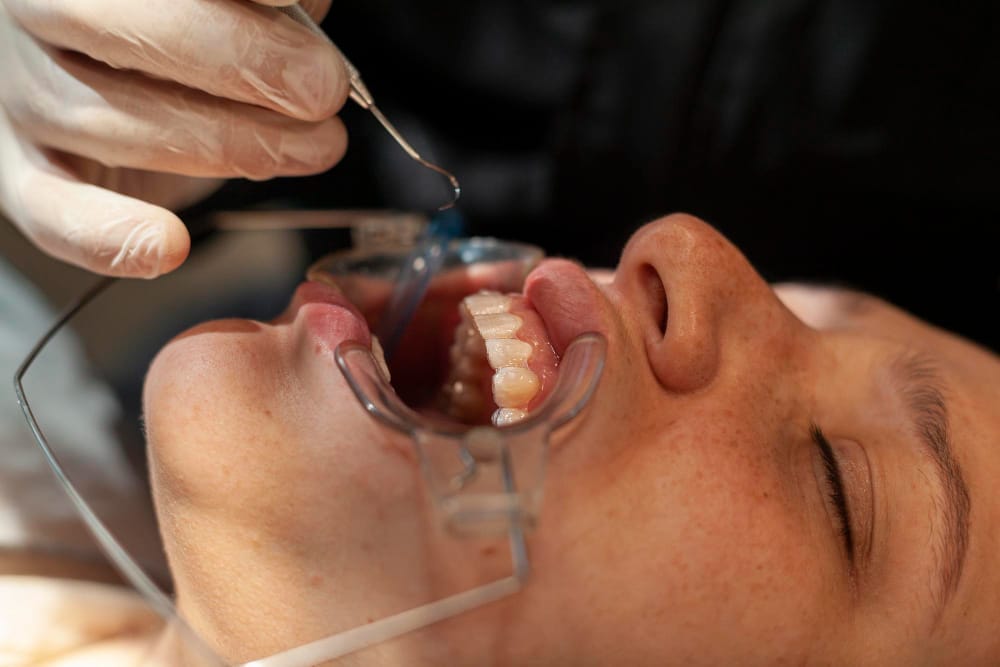
Taking care of several dental problems at once can feel overwhelming. And it might feel really overwhelming when every tooth may need dental care. Because of this, you may have delayed visiting the dentist, causing problems to worsen over time.
Full mouth reconstruction could be the answer you need. This method addresses multiple dental issues simultaneously. It helps to give you back your smile and boosts your overall health. It also improves how you feel every day.
What Full Mouth Reconstruction Actually Involves
Full mouth reconstruction is not just one treatment. It’s like assembling a team where every part works well with the others, resulting in a nice outcome. Your dentist will create a comprehensive plan to address all significant dental issues in your mouth simultaneously. The aim is to work on everything together, not on each tooth by itself.
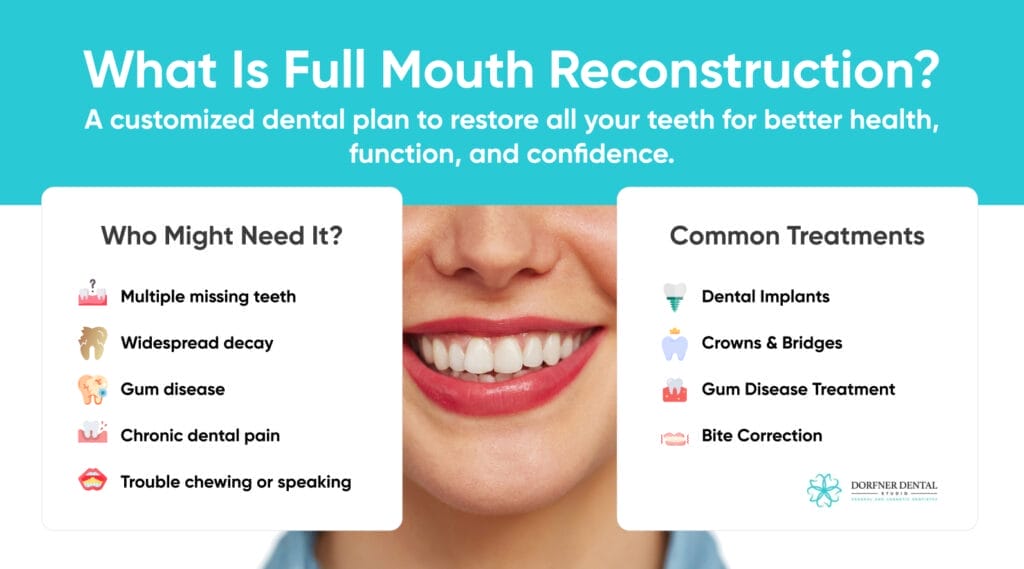
This approach is typically necessary when you have severe tooth decay affecting multiple teeth. It can also be due to significant tooth loss resulting from gum disease or an accident. Teeth can also get worn out from grinding. Some people have bite problems that make it hard to chew or move the jaw properly. You might also have to deal with issues about how your teeth look and how they work. These problems often show up after many years.
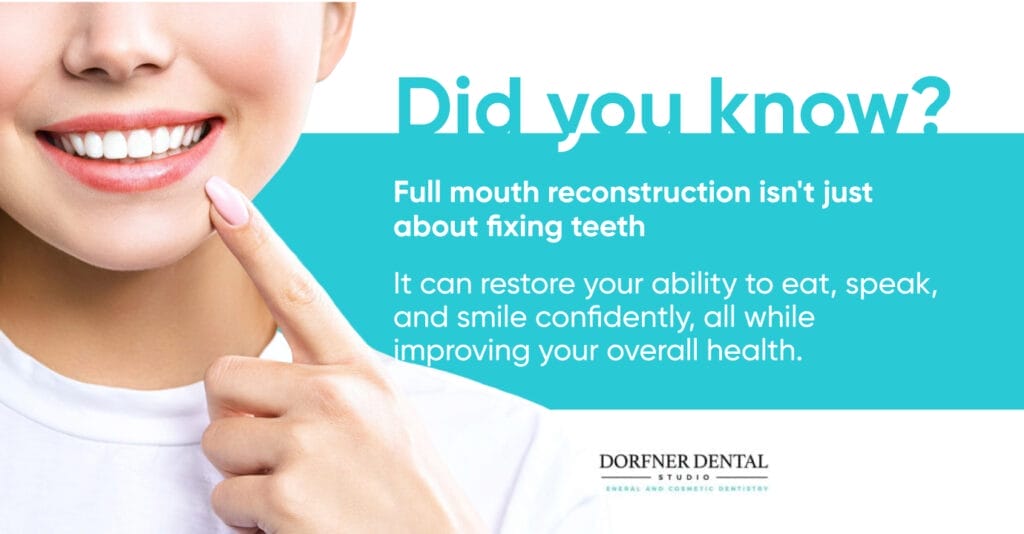
The goal is not just to fix what is broken. It aims to restore your mouth to great health and ensure it functions properly. You should also have a smile that looks great and feels natural. We want you to feel happy to show your smile. This is about getting back to eating your meals with no pain, talking easily, and feeling good around people again.
Determining If You’re a Candidate for Reconstruction
Not every person with dental problems needs a full mouth reconstruction, and that is okay. This treatment is typically recommended for individuals with numerous dental issues that cannot be resolved with minor repairs. It also makes more sense to go for this treatment if getting many little fixes would cost you more money over time.
You might be a good candidate if you’re experiencing:
- Multiple missing teeth that make eating difficult or affect your speech. When you’ve lost several teeth, replacing them individually often isn’t the most effective approach.
- Widespread tooth decay that has damaged most of your natural teeth. Sometimes it’s more practical to address everything at once rather than treating each tooth separately over months or years.
- Advanced gum disease that has compromised the foundation supporting your teeth. Healthy gums are essential for any dental work to succeed long-term.
- Chronic dental pain that interferes with daily activities. When discomfort becomes constant, comprehensive treatment can provide lasting relief.
- Functional problems like difficulty chewing or speaking clearly. Your teeth work as a system, and when that system breaks down, you need a systematic solution.
The Treatment Options Available for Your Reconstruction
Your own needs decide which treatments will be in your personal plan. This is what makes each reconstruction different for people. Most full treatments combine multiple approaches to help you. Each is picked for how well it fits your case and works with the other things in your plan.
Dental Implants: The Foundation of Modern Reconstruction
Dental implant restoration has really changed the way we deal with missing teeth. They are now the top choice for many people, and for good reason. A dental implant is a metal post made from titanium. Over time, after being surgically inserted into your jawbone, the post fuses with your jawbone during a process called osseointegration, which provides a strong base for crowns, bridges, or even a full set of new teeth. Unlike regular dentures that just rest on your gums, dental implants feel like your real teeth. This is because they stay firmly in your jaw.
What makes implants so good in full mouth reconstruction is that they can be used in many ways. A single implant can hold one crown. You can use several implants to keep a bridge in place. You can also place these implants in key locations to have all the teeth in a single row. They help save your jawbone, too. Your jaw can get smaller when you lose teeth, but implants can stop that from happening.
Dental Crowns and Bridges: Restoring What Remains
When your real teeth get hurt but can still be saved, dental crowns cover them to keep them safe. These days, most crowns look just like real teeth. If you take good care of them, they can last for many years.
Often, people use crowns along with root canal work to help keep teeth that might have to be pulled out.
Dental bridges fill the space where you have missing teeth by connecting to the teeth next to the gap or to implants. They help you chew well and keep your other teeth in place. If you need all your teeth fixed, bridges often work with implants to give you a result that looks good and works well.
Addressing Gum Disease: The Critical Foundation
Any comprehensive reconstruction needs to start with healthy gums. Gum disease doesn’t just affect your gums—it can destroy the bone that supports your teeth and compromise any dental work you have done. Advanced periodontal treatment might include deep cleaning, medication, or even surgical procedures to eliminate infection and create a healthy foundation for your reconstruction.
This first step may not be the most exciting part of rebuilding your teeth, but it is very important. You cannot put new dental work on top of gums and bone that are not healthy. Taking care of the periodontal problems will help your restoration last for a long time.
Your Reconstruction Journey: From Planning to Your New Smile
Understanding the process can help alleviate your worries about this major treatment. Also, when you know what will happen, it gets easier to handle. Most reconstructions follow the same steps, but things can change based on your needs.
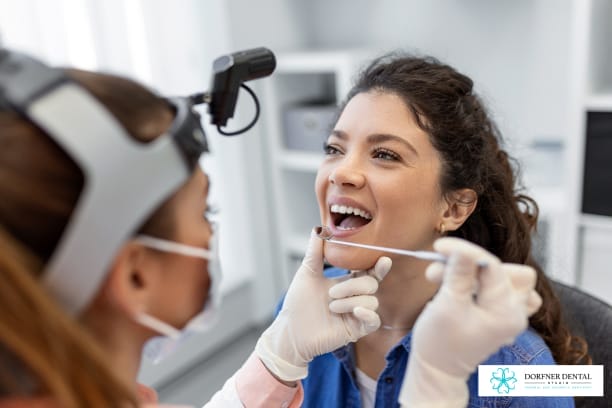
Your treatment starts with in-depth checks that do much more than a regular dental exam. You will have detailed X-rays done, and they will also take impressions of your teeth. A bite check and photos that show where you begin are included as well. This planning time may feel long, but it is important. Here, your dental team makes a plan that fits your needs and goals in the best way.
Any infections, severe pain, or other urgent problems will be addressed first. You should not have to go through pain when you plan for your reconstruction. Taking care of these issues right away helps the rest of the treatment feel better and go smoothly.
The real process of rebuilding your teeth happens step by step. Some treatments must come first, like taking care of gum disease before putting in an implant. After we put in the implants, we have to wait for them to join with your jaw before we can connect your new teeth. We choose this order for a reason. It helps you get the best long-term outcome.
During your treatment, you will not be left without teeth. Our Burlington dentist uses temporary crowns, bridges, or other ways to keep your smile and help you chew during the rebuilding process. These options also let you see what your final smile will look like and let the dentist make changes before creating your final teeth.
Recovery and Adjusting to Your New Smile
Recovery from full mouth reconstruction is different for each person. It depends on the procedures you need. If you know what to expect, you can feel better as you heal. The good news is that most pain or aches will not last long. You can manage them as you go through the healing process.
For the first few weeks, healing often comes with some swelling and a bit of pain. This is normal after things like getting a dental implant or having a tooth taken out. Pain medicine can help alleviate these signs, and you can use cold packs to reduce swelling in the first day or two. Most people feel that they only need regular pain medicine from the store after the first few days.
To help with healing, you will need to change the foods you eat for a while. But this does not mean you can only eat soup and smoothies for many months. In the beginning, soft foods will help you the most. These foods can be pasta, eggs, fish, and cooked vegetables. As you heal, you will start eating all your favorite foods again. You might even find that you can chew better than before.
You might feel that the way you talk is a bit different when your tongue gets used to where your teeth are or how they look now. This is normal, and most people get used to it in a few days or weeks. You can read something out loud or talk with people to help your tongue get used to it faster.
Energy levels can initially decrease because your body is using its resources to heal. It is usually good to take time away from work for the first few days after big procedures. Do not be shocked if you feel more tired than you usually do for a week or two.
The Investment in Your Future Health and Happiness
Full mouth reconstruction costs a lot of money, but consider the benefits you get in return. You will be able to eat better and feel less pain. You can eat whatever you want, and you’ll feel healthier. Your body gets good nutrition, and your teeth work well again. A better smile can help you feel good about yourself. In the end, you are not just paying for dental work. You are investing in a better way to live.
Many people find that getting complete treatment at the start can save a lot of money over time. It may stop years of pain and prevent you from having to fix the same problem again and again. When you add up what you spend over a long time, fixing things the right way in the beginning often stands out. You could save money on pain pills, trips to the doctor, and days missed at work. You also avoid having to keep getting treatments that only deal with the pain, but not what is really wrong.
A moderate reconstruction can cost between $15,000-$40,000. An extensive mouth reconstruction typically costs between $30,000-$90,000, depending on needed procedures. Most dental offices offer payment plans, healthcare credit options, or in-house financing programs to make the cost of treatment more manageable. Do not think you cannot get this care because of the cost. Talk with your dentist about ways to pay, and ask about plans to help you spread out your payments.
Taking the Next Step Toward Your New Smile
If you have many dental problems, full mouth reconstruction could be the answer you are looking for. This treatment has changed the lives of people. It eliminates chronic pain. It helps you eat your favorite foods again. It also helps people feel good about themselves when they are with friends or at work.
Your journey begins with a meeting to discuss your concerns. You will get to know about your options. A treatment plan will be made to fit your needs and what you can afford. You do not have to agree to anything just by coming in or asking questions. You are there to get the information that you need to make a good choice about your dental health.
The change you get with full mouth reconstruction is much more than fixing teeth. It helps bring back your quality of life. It helps you feel good about yourself and feel better in general. Set up a meeting with your dentist and start moving toward a better life. You will feel glad you did this later on.